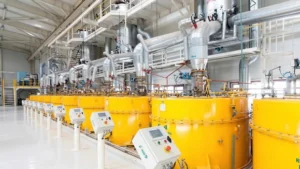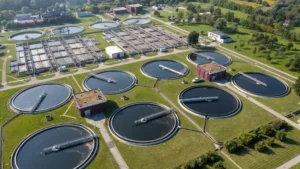

In industrial processing, particularly within oil and water mills, fluid management is the lifeblood of daily operations. Whether handling raw water for boilers, treating wastewater effluent, or storing valuable commodities like crude palm oil, accurate inventory management is critical.
For years, facility operators relied on manual sounding tapes, dipsticks, or basic mechanical float switches to gauge tank levels. Today, the industrial landscape is shifting. To remain competitive and compliant, mills are turning to Intelligent Tank Monitoring to transform static storage tanks into dynamic, data-generating assets.
The Hidden Costs of Traditional Monitoring
Before adopting intelligent systems, plant managers often face several operational blind spots:
- Inaccurate Inventory: Manual measurements are prone to human error and cannot account for fluid density changes caused by temperature fluctuations, leading to discrepancies in mass balances.
- Safety and Environmental Risks: Relying on basic high-level alarms or visual inspections increases the risk of hazardous overflows, spills, and subsequent environmental fines.
- Reactive Operations: Without real-time visibility, operators cannot anticipate when a tank will run dry or reach capacity, leading to unplanned production bottlenecks.
What is Intelligent Tank Monitoring?
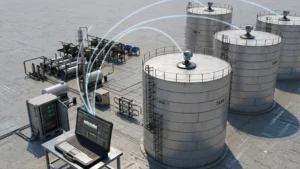
Intelligent tank monitoring moves beyond simple mechanical measurements. It utilizes advanced Industrial Internet of Things (IIoT) sensors—such as non-contact radar, guided wave radar, or ultrasonic transmitters—to continuously measure liquid level, temperature, pressure, and volume.
These sensors provide highly accurate, continuous data streams, even in harsh mill environments involving corrosive water treatments, high-temperature steam, or viscous oils. However, generating this data is only the first step.
The Crucial Link: SCADA and IT Infrastructure
The true optimization of mill operations happens when intelligent sensors are fully integrated with the facility’s SCADA (Supervisory Control and Data Acquisition) system. SCADA acts as the central nervous system of industrial automation, bridging the gap between field instruments and the IT infrastructure used by decision-makers.
Here is how SCADA elevates intelligent tank monitoring:
- Centralized Visualization: Instead of sending technicians to climb tanks in hazardous conditions, operators can view real-time tank levels across the entire mill through an intuitive Human-Machine Interface (HMI) in the control room.
- Automated Control Loops: SCADA does not just monitor; it controls. If a water treatment tank reaches a critical low level, the SCADA system, communicating through Programmable Logic Controllers (PLCs), can automatically open supply valves and start transfer pumps without human intervention.
- Historical Trending and IT Integration: SCADA systems log historical data, which can be pushed to secure IT servers or cloud dashboards. This allows plant managers to analyze consumption trends over time, optimize supply chains, and generate automated reports for environmental compliance.
Driving Operational Excellence
Implementing an intelligent monitoring system integrated with robust SCADA architecture delivers immediate industrial benefits:
- Elimination of Overfills and Run-Outs: Continuous monitoring ensures that pumps and valves are actuated at the precise moment required, protecting equipment from running dry and preventing costly environmental spills.
- Maximized Storage Utilization: With high-confidence accuracy, operators can safely fill tanks closer to their maximum capacity, optimizing the existing footprint without needing to build additional storage.
- Enhanced Worker Safety: Removing the need for operators to manually check levels on top of tall, potentially slippery, or heated tanks drastically reduces workplace accidents and exposure to hazardous fumes.
- Predictive Maintenance: By analyzing the data trends (for example, a tank draining slower than usual), maintenance teams can identify partial pipe blockages or failing pumps before they cause a complete plant shutdown.
Moving Forward
Transitioning to intelligent tank monitoring is a foundational step toward true industrial automation. By integrating smart sensors with a reliable SCADA network, oil and water mills can achieve a unified, real-time view of their fluid assets, driving safer, leaner, and more profitable operations.