
Water processing facilities – whether handling municipal drinking water or industrial wastewater – operate under constant pressure. Plant managers must balance the demand for high-quality water output with strict environmental compliance, aging equipment, and rising energy costs. Traditional, reactive management is no longer sufficient.
To thrive in today’s industrial landscape, facilities are embracing Smart Water Treatment. By integrating intelligent sensors, automated control strategies, and robust IT infrastructure, modern water processing plants can drastically reduce operational bottlenecks and transform into highly efficient, data-driven operations.
Identifying the Operational Bottlenecks
Before upgrading a facility, it is essential to identify the traditional practices that drain resources and inflate operating costs:
- Energy Inefficiency: Aeration systems and high-capacity pumps typically consume the lion’s share of a plant’s energy. Running these motors at a constant, maximum speed regardless of actual flow demand leads to significant power waste.
- Inaccurate Chemical Dosing: Relying on manual sampling or static timers to inject coagulants, chlorine, or pH-adjusting chemicals often results in over-dosing (wasting expensive materials) or under-dosing (risking poor water quality).
- Reactive Maintenance: Running equipment to the point of failure causes unplanned downtime. A sudden breakdown of a primary pump or membrane system can halt the entire process and risk regulatory violations.
Key Strategies for Smart Optimization
Transitioning to a smart water treatment facility involves deploying technologies that respond dynamically to changing conditions. The most impactful strategies include:
1. Implementing Variable Frequency Drives (VFDs)
Instead of running pumps and blowers at a fixed speed, VFDs allow operators to adjust motor speeds to precisely match the real-time flow and pressure requirements. This targeted power usage dramatically reduces energy consumption and minimizes mechanical wear and tear on the equipment.
2. Dynamic, Sensor-Driven Dosing
Smart facilities replace manual chemical dosing with automated systems. By installing inline sensors that continuously monitor water quality metrics like turbidity, pH, and dissolved oxygen, dosing pumps can adjust their output in real-time. This ensures absolute precision, cuts chemical costs, and guarantees consistent water purity.
3. Shifting to Predictive Maintenance
By equipping critical assets with IoT sensors that track vibration, temperature, and pressure, plant engineers can monitor the health of their machinery. This data allows maintenance teams to spot early signs of wear (like a partially clogged filter or a degrading bearing) and schedule repairs during planned downtime, completely avoiding emergency shutdowns.
The Brain of the Operation: The Role of SCADA
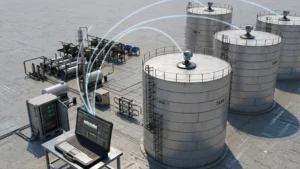
While VFDs, inline sensors, and automated pumps handle the physical processing, they require a central intelligence to function cohesively. This is where the SCADA (Supervisory Control and Data Acquisition) system becomes the most critical component of a smart water treatment plant.
SCADA bridges the gap between the operational technology (OT) on the plant floor and the facility’s IT infrastructure:
- Complete Operational Visibility: SCADA aggregates millions of data points from across the facility into a centralized, intuitive dashboard. Operators in the control room can monitor tank levels, valve statuses, and chemical concentrations in real time without needing to physically inspect each station.
- Automated Control Logic: SCADA software drives the optimization. If an inline sensor detects an unexpected drop in water quality, the SCADA system instantly communicates with the plant’s Programmable Logic Controllers (PLCs) to adjust the VFD speeds or increase chemical dosing, all without human intervention.
- IT Integration and Compliance Reporting: Modern SCADA systems continuously archive historical performance data. This data is seamlessly pushed to IT servers, allowing management to track long-term energy trends, optimize the supply chain, and automatically generate accurate compliance reports for environmental regulators.
The Bottom Line for Industrial Facilities
Adopting smart water treatment strategies is a necessary business evolution. By combining advanced field instruments with a powerful SCADA network, water processing facilities can achieve a unified, real-time approach to operations. The result is a highly measurable return on investment: lower energy bills, optimized chemical usage, fewer equipment failures, and rock-solid environmental compliance.