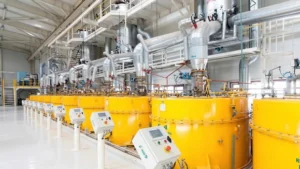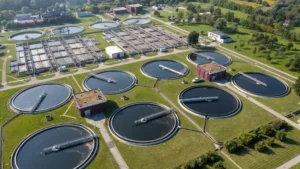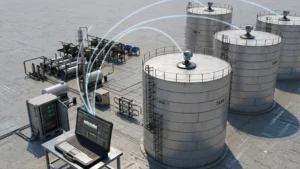

The global demand for palm oil continues to rise, but the industry faces mounting pressure to improve sustainability, maximize yields, and reduce operational costs. For decades, palm oil mills have relied on manual monitoring, traditional machinery, and reactive maintenance. Today, the transition to Industry 4.0 is no longer a futuristic concept – it is a business imperative. By integrating the Internet of Things (IoT), advanced IT infrastructure, and data-driven control systems, palm oil mills are transforming into smart facilities where real-time insights drive profitability.
The Bottlenecks of Traditional Palm Oil Mills
Before exploring the solutions, it is essential to understand the limitations of legacy operations:
- Suboptimal Oil Extraction Rate (OER): Manual adjustments of sterilizers, digesters, and screw presses often lead to inconsistent extraction efficiency and higher oil losses in the pressed fiber or heavy phase.
- Unplanned Downtime: Relying on reactive or purely schedule-based maintenance means equipment failures (like screw press blockages or boiler malfunctions) halt production, costing operations thousands of dollars per hour.
- Siloed Information: Data is often recorded manually on paper clipboards or trapped in isolated machines, preventing plant managers from having a holistic view of the facility’s actual performance.
Enter Industry 4.0: The Power of Real-Time Data
Industry 4.0 in palm oil processing is built on the foundation of continuous, real-time data collection. By deploying Industrial IoT (IIoT) sensors across the mill’s infrastructure, operators can capture critical metrics such as temperature, pressure, mixing intensity, and energy consumption instantly.
This data is then aggregated to provide unprecedented visibility. For business leaders, this means moving from guessing what went wrong yesterday to knowing exactly what is happening right now and predicting what will happen tomorrow.
The Crucial Role of SCADA in the Smart Mill
While IoT sensors gather the raw data, the true operational transformation happens when this data is centralized. This is where SCADA (Supervisory Control and Data Acquisition) systems become the central nervous system of the smart mill.
In an Industry 4.0 setup, SCADA bridges the gap between the physical machinery on the shop floor and the IT infrastructure that business managers rely on:
- Centralized Visibility: SCADA software gathers real-time inputs from Programmable Logic Controllers (PLCs) and IoT sensors attached to boilers, sterilizers, and clarification tanks, displaying them on intuitive, centralized dashboards.
- Remote Monitoring and Control: Plant managers do not need to physically inspect every station. Through SCADA, they can remotely monitor operational parameters and send automated control commands—such as adjusting steam valves or modifying feed rates—to optimize the process dynamically without human intervention.
- Real-Time Alerts: If a machine is overfed with palm kernels, causing a sudden spike in motor power consumption, the SCADA system immediately triggers an alarm. This allows operators to intervene before the equipment jams or breaks.
Bottom-Line Benefits for Palm Oil Businesses
For stakeholders and plant operators, integrating Industry 4.0 translates directly to a stronger bottom line:
- Maximized Oil Extraction Rate (OER): Advanced algorithms integrated with SCADA can automate mass balance and dynamically adjust process variables. By maintaining precise temperatures and pressures in real time, mills can significantly reduce oil loss and boost OER margins.
- Predictive Maintenance: Instead of waiting for a machine to break, vibration and temperature data analyzed through the system can predict equipment degradation. Maintenance can be scheduled during planned downtime, maximizing throughput and extending machinery lifespan.
- Energy and Utility Efficiency: Boilers and power control systems integrated with real-time tracking allow mills to pinpoint energy waste. Smart monitoring ensures that the consumption of electricity and steam is optimized for the current production load.
- Simplified Sustainability Compliance: Environmental regulations and certifications like the RSPO require stringent reporting. Digital platforms facilitate automated, real-time tracking of Palm Oil Mill Effluent (POME) discharge, wastewater quality, and greenhouse gas emissions, ensuring seamless compliance without manual paperwork.
The Road Ahead
The modernization of palm oil mills from traditional factories to digitally integrated ecosystems is a strategic necessity. By leveraging modern IT infrastructure, IoT sensors, and robust SCADA systems, palm oil businesses can unlock a new level of operational efficiency, cost reduction, and sustainability. Embracing real-time data isn’t just about upgrading technology; it’s about future-proofing the business in an increasingly competitive and heavily regulated global market.